European Union Training 101
Understand how the EU works before EU policy decisions affect your organization.
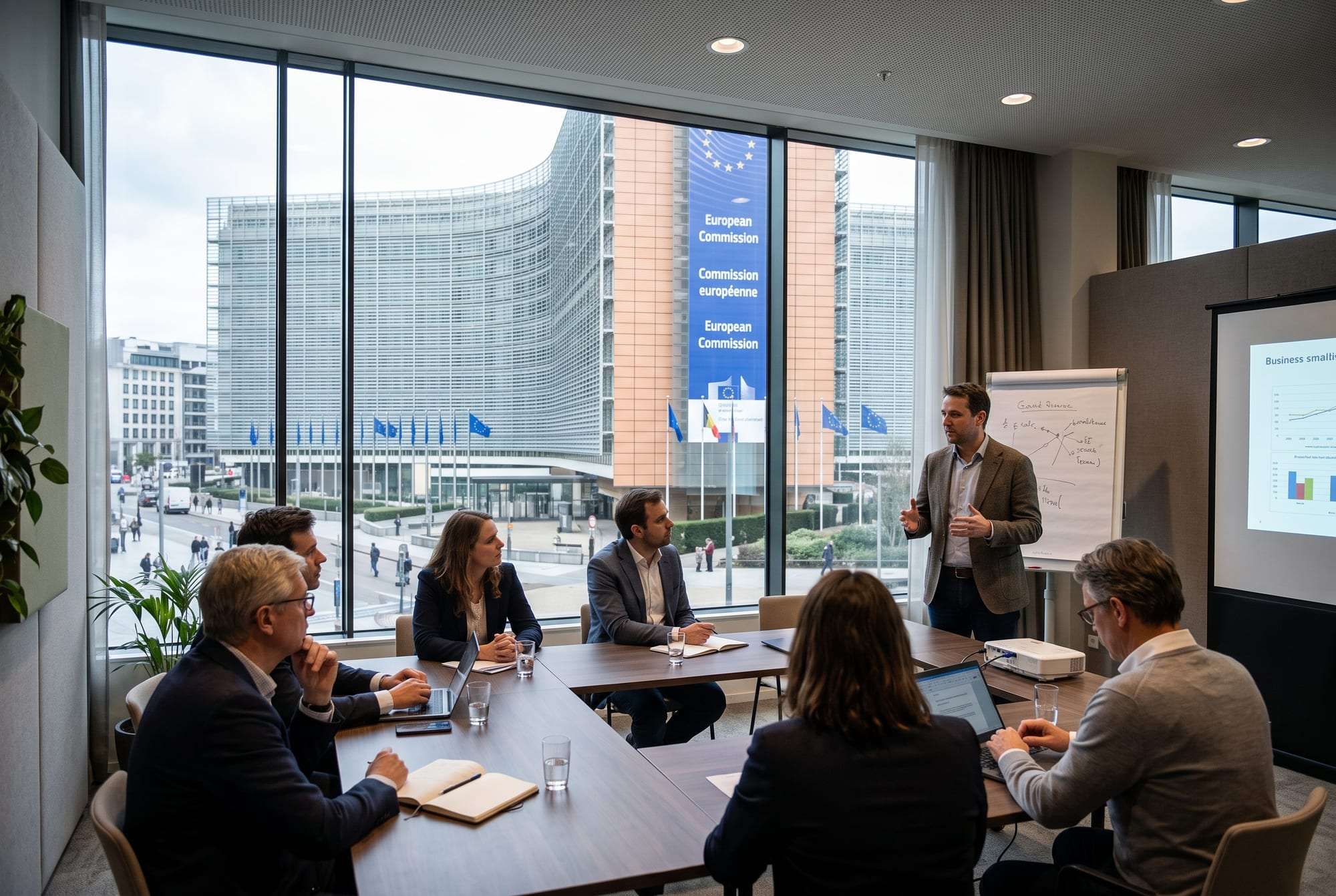
A practical, plain-English training in Brussels, run by two former EU correspondents. Small, tailored groups meet the people working in and with the EU institutions — face-to-face, not just slides.
Scroll to spin the compass. It always finds North.
- Artificial intelligence
- Digital & data
- Agriculture
- Automotive
- Chemicals
- Trade & competitiveness
- Climate & energy
- Sustainability
- Competition
- Labor & social policy
- Health & consumer
- Media & platforms
What we offer
Tailored training
Training tailored to participants' sector, policy interests, and prior knowledge.
Transatlantic perspective
A strong transatlantic perspective for U.S., Canadian and international audiences.
Empowering
Emphasis on consequences, stakeholders, timing and action — face-to-face meetings and discussions, not just institutional diagrams and presentations.
Plain English
Plain-English explanations with minimal jargon.
Why it matters
The EU increasingly shapes global policies related to many sectors, including AI, digital, agriculture, automotive, and chemicals — among others. For companies and organizations outside Europe, EU rules can affect M&A, R&D, products, data, compliance, communications, or market access.
For organizations used to Washington, Ottawa, or Westminster-style systems, Brussels can feel complex and confusing. That is exactly why a focused, in-person EU training with experts working in and around the EU institutions can improve your decision-making and judgment, and help your team engage the right institutions and stakeholders in time and with greater confidence.
- What moves the EU agenda?
- How do political groups in the European Parliament relate to national politics?
- What's the difference between the European Council, the Council of Ministers, and the Council of Europe?
- When should I engage?
What participants learn
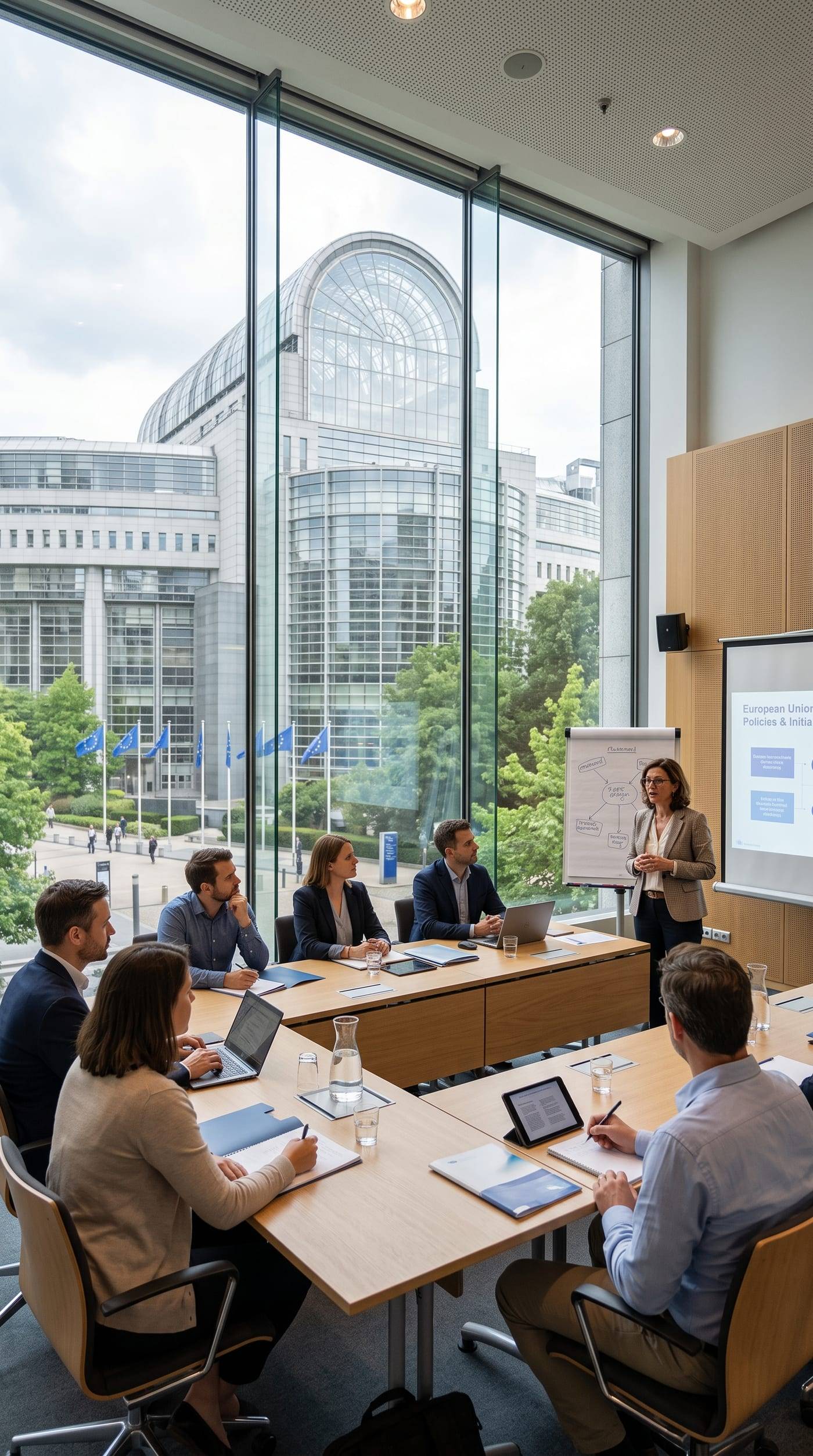
By the end of the training, participants will be able to:
Explain the exact roles and power of the European Commission, European Parliament, and national governments — in plain English
Recognize the difference between political priorities, legislative proposals, delegated acts, enforcement, and informal influence
Identify where decisions are actually shaped and when outside organizations should engage
Track the policy pipeline more confidently and distinguish headline politics from the files that matter most
Prepare for Brussels meetings with a clearer understanding of whom to approach, what to ask, and how to communicate effectively
Two training formats
Our core offer is an on-site European Union training in Brussels: an intensive two- to three-day immersion for small delegations and professional groups of 8–10 people.
Two-day crash course
A compact introduction to the EU with a sector focus. A clear institutional overview plus sector-specific briefings.
Best for: Professional groups with limited time
Three-day deep dive
More meetings and contextual learning. Deep understanding, meetings, and contextual immersion.
Best for: Delegations, associations, NGOs, unions, companies
A typical Brussels program can include
- A practical introduction to how the European Union works
- A clear guide to the institutions, political groups, and policy process
- Sector-specific briefings tailored to the delegation's interests
- Meetings with relevant EU actors, associations, experts, journalists, or stakeholders active in the field
- Advice on Brussels norms, policy language, timing, and relationship-building
Who this is for
Participants do not need prior EU expertise. The course is designed for smart professionals who need a fast, accurate, usable mental map of how Brussels works and how the EU makes decisions in their field.
Businesses and investors
Operating in or planning to enter the EU market or weighing mergers or acquisitions in the EU
Business associations
Tracking EU regulatory and advocacy opportunities — or threats — on behalf of their members
Trade unions
Engaging on labor, social, industrial or sustainability policies
NGOs
Working on climate, digital, health, consumer, development, or rights issues
Journalists and editors
Explaining Europe to non-European audiences
Universities, think tanks and foundations
Public-interest groups seeking a practical introduction to the EU system
Non-exhaustive list. If your organization is affected by EU decisions, the training can be tailored to you.
Why Brussels works as a classroom
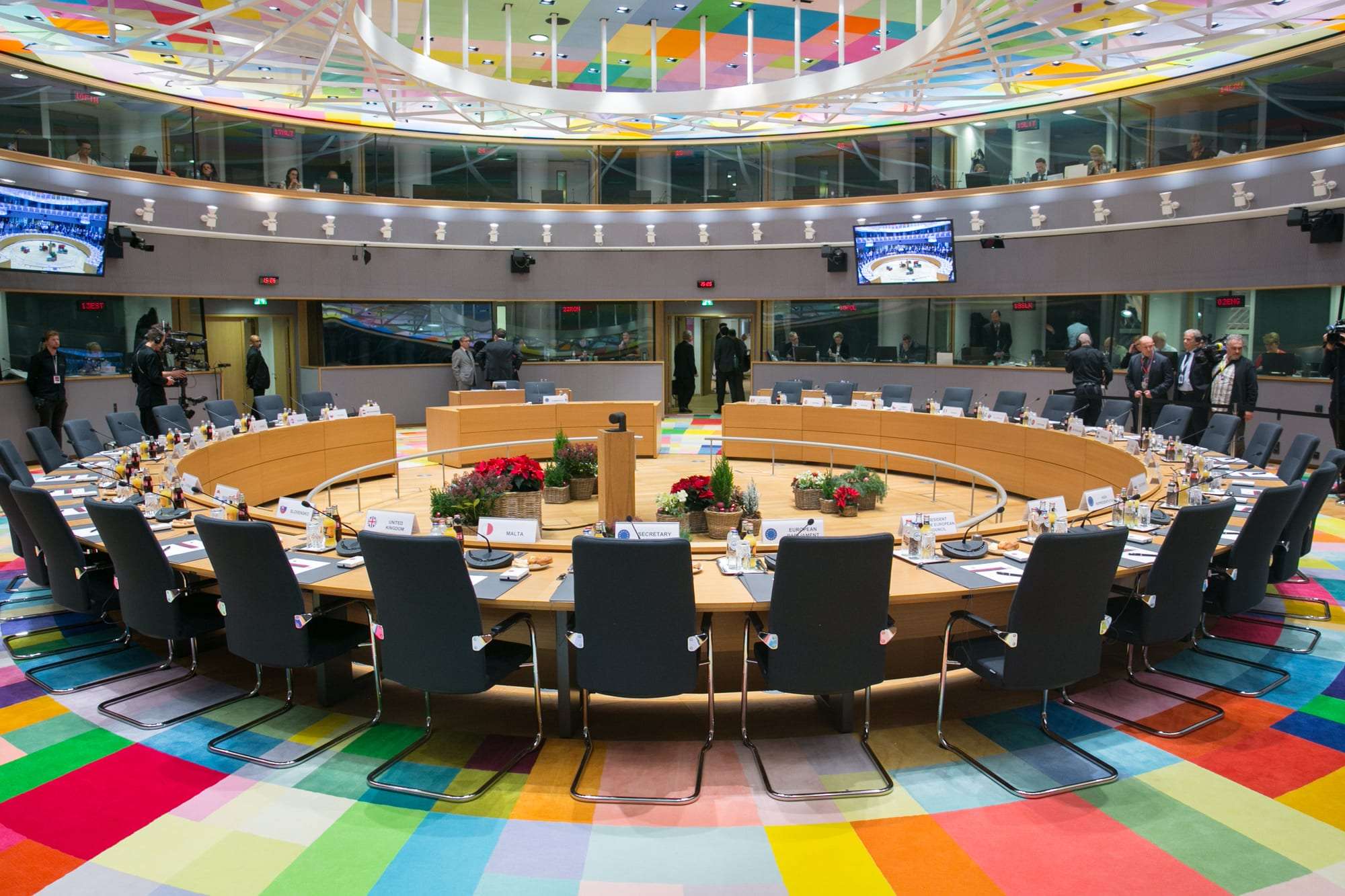
Brussels is not just the subject of the training; it is one of the teaching tools. Learning on-site strengthens understanding because participants can connect institutions, neighbourhoods, meetings, and policy conversations to lived experience rather than slides and desk research. In the EU context, informal signals, timing, institutional culture, and networks often shape how decisions are interpreted and where attention will shift next.
Who runs the course
Brussels Compass was started in 2026 by two former EU correspondents with decades of Brussels experience.

Brandon Mitchener
- Former EU correspondent, The Wall Street Journal
- Freelance journalist
Brandon Mitchener covered the EU for The Wall Street Journal and continues to work as a freelance journalist, mostly on science and technology topics.
Read full bioHide full bio
Brandon Mitchener is a Brussels-based journalist and independent communications consultant and trainer with 30+ years of experience. His specialty is helping organisations, individuals, and the public connect and make better decisions, especially in relation to economic, political, scientific, and technical topics.
Current clients include two business associations, an EU training organization, a U.S. creative agency, and Science|Business, a media organization. Brandon is also Executive Director of a U.S. non-profit organization, Tax Fairness for Americans Abroad, which is campaigning to end the double taxation of Americans abroad. He also runs a successful side business doing wine tastings.
Previously, Brandon led regional strategic and corporate communications for APCO Europe, First Solar Inc., Monsanto Corp., and Instinctif Partners Brussels for four years each. He also led the European Business Aviation Association for a year.
Before that, Brandon was a full-time journalist and foreign correspondent for The Wall Street Journal, The International Herald Tribune, and Dow Jones Newswires in New York, Frankfurt, and Brussels for 15 years. He covered financial markets, German unification, the automotive industry, the introduction of the euro, antitrust policy, European business regulation, food safety, technology, and EU politics, among other topics.
Brandon has a Master of Science in Journalism from Columbia University in New York and a Bachelor of Arts degree in German literature from Wabash College. A citizen of the United States, Belgium and France, he speaks English, French, German, and Italian.

Jacob Langvad
- Former Brussels correspondent, Danish Radio
- EU trainings since 2017
Jacob Langvad covered Brussels for Danish Radio before starting training programs in 2017 to help journalists and businesses better understand and navigate the EU decision-making process.
Read full bioHide full bio
A Brussels insider with a longstanding and highly varied media and communications experience.
As a journalist I have worked as European affairs correspondent for a string of leading Danish print media, as a voice from Brussels for the Danish public radio for a decade, and as news editor with the influential European affairs site EurActiv.com (now Rapporteur).
Wanting to enlarge my scope beyond the press, I have also spent several years working in corporate communications with American companies such as Hill & Knowlton and Weber Shandwick before eventually setting up my own company, providing media training and workshops, advice on press relations, strategic communication and advocacy.
In 2017 I set up a travel company to provide EU-policy orientated training and study trips to Brussels on EU policy for press colleagues and for businesses. The main purpose is to build bridges between my network of Brussels-based insiders and professionals on the outside that need a clearer understanding of the workings of the EU. More than 300 visitors have so far taken part in my trainings, helping them to better navigate EU and the complex world of Brussels policies.
My general desire to improve understanding of EU policies has also led me to author two textbooks on Europe for high school students.
Originally a trained lawyer, I was more attracted to the world of press and international politics, and made the move to Brussels from my native Copenhagen in 1993. I work in English, French and Danish.
What makes it different
Many EU courses are academic, generic, or aimed at people seeking EU careers. This training is built for people and organizations that need practical understanding, strategic orientation, and usable insights into how Brussels works in the real world.
Our approach combines deep experience in international media, training and policy communication, with a transatlantic perspective that speaks directly to non-EU audiences. That means less jargon, faster comprehension, and more emphasis on what matters operationally: stakeholders, timing, action, and consequences.
What participants say
From previous Brussels study trips and trainings led by Jacob Langvad.
I've learned a lot. It's been a really good week. We visited NATO and met with politicians, interest groups, and think tanks. Coming from a position where I didn't necessarily grasp the full context of the EU, I feel I've gained a good understanding of how things fit together in Brussels — the various interests the different parties have in advancing a cause, as well as the need to navigate the very complex dynamics that are at play here. I've found that incredibly fascinating.
Jacob organized a highly successful study trip for the Axcelfuture advisory board focusing on renewable energy and PtX and guided us around Brussels from meeting to meeting. Jacob has his finger on the pulse of the EU and knows Brussels inside out.
Thank you for an eye-opening trip to Brussels. The broad field of actors provided new and different perspectives on challenges in international energy policy than the debates in Denmark. I would therefore like to recommend the study trip to others when the opportunity arises again.
Thank you very much for an inspiring tour of the Tower of Babel in Brussels: different technological rationales, ideas and traditions that speak in East, West, South and North and unfortunately often pass each other by.
The Danish business think tank Axcelfuture had a fantastic trip to Brussels. The result was a much better understanding of the possible response from the EU on the US Inflation Reduction Act and many other aspects of the green transition. Jacob was a great host who also paved the way for many of our meetings. It was a brilliant program. We went home with a lot more knowledge on the complexity of the decision process.
It has been both educational and thought-provoking to see how the EU approaches the green transition — and how we, as stakeholders in Denmark, can play an active role in our shared European energy future. The trip to Brussels has provided fresh inspiration and confirmed that we have a great deal to offer. At the same time, it highlighted the need for us to become even better at thinking across sectors and national borders.
How it works
Tell us about your group
A short call about your organization, your sector and what you need to understand about Brussels.
We tailor the program
We design the briefings and line up meetings with the practitioners who matter for your policy space. Preparatory briefings are available as a first step.
Immersion in Brussels
Two or three days on the ground, meeting the people who work in and with the EU institutions, with your questions answered in plain English.
Book a Brussels EU training
Contact us to discuss dates, format, and tailoring for your organization and to ask for a quote. We reply personally.
Frequently asked questions
Is this European Union training only for specialists?
No. The training is designed for professionals who are new to EU affairs as well as those who already engage Europe occasionally but want a sharper, more structured understanding of how Brussels really works.
Is the course academic or practical?
The emphasis is practical. Participants leave with a clearer grasp of institutions and process, but also with stronger judgment about where influence sits, which conversations matter, and how to prepare for real engagement in Brussels.
Can the training be customized?
Yes. The course can be tailored by sector, policy issue, level of prior knowledge, and audience type, including companies, business associations, unions, NGOs, media organizations, universities, and mixed delegations.
Are online trainings available?
No, because we are convinced of the added value of our face-to-face trainings. However, we are happy to organize consultations and preparatory briefings as a first step before an on-site Brussels program.
What is included in the package?
The tailored training program and materials, accommodation, food and drink, and all local transport.